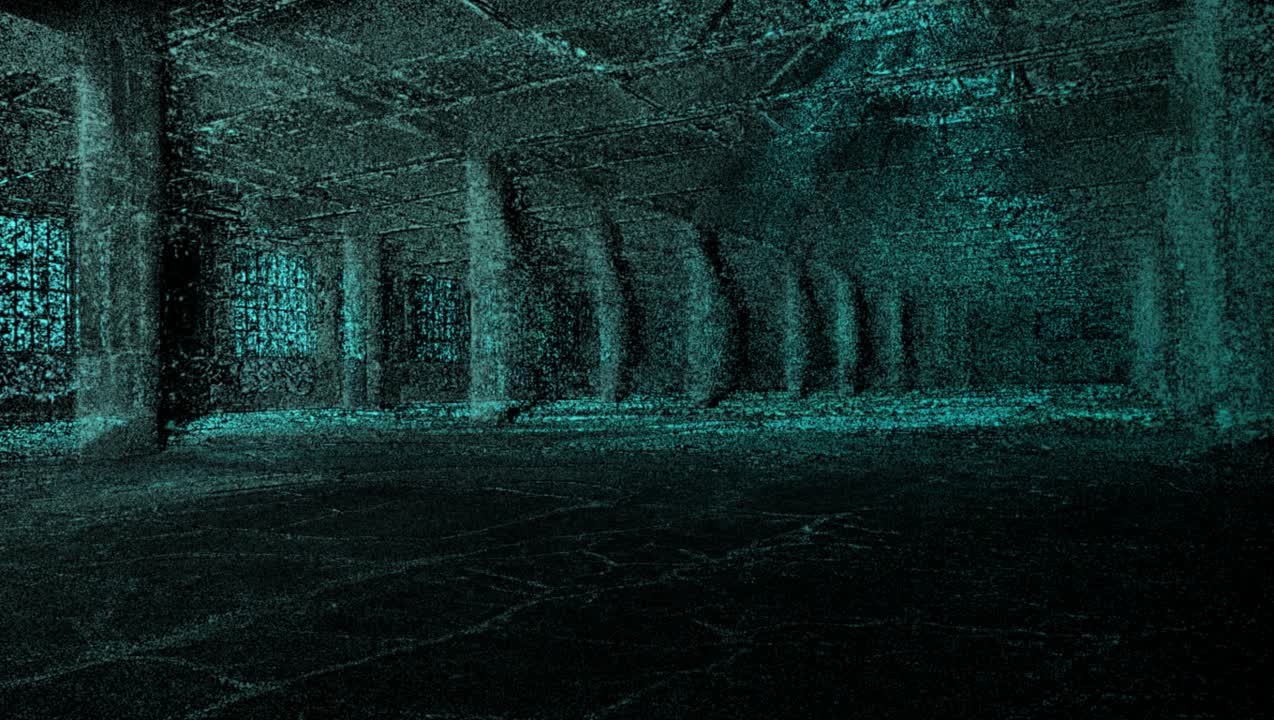
Echo turns images, prompts, panoramas, and spatial references into persistent Gaussian Splat worlds for creative tools, simulation, digital twins, games, film, real estate, robotics, and the web.
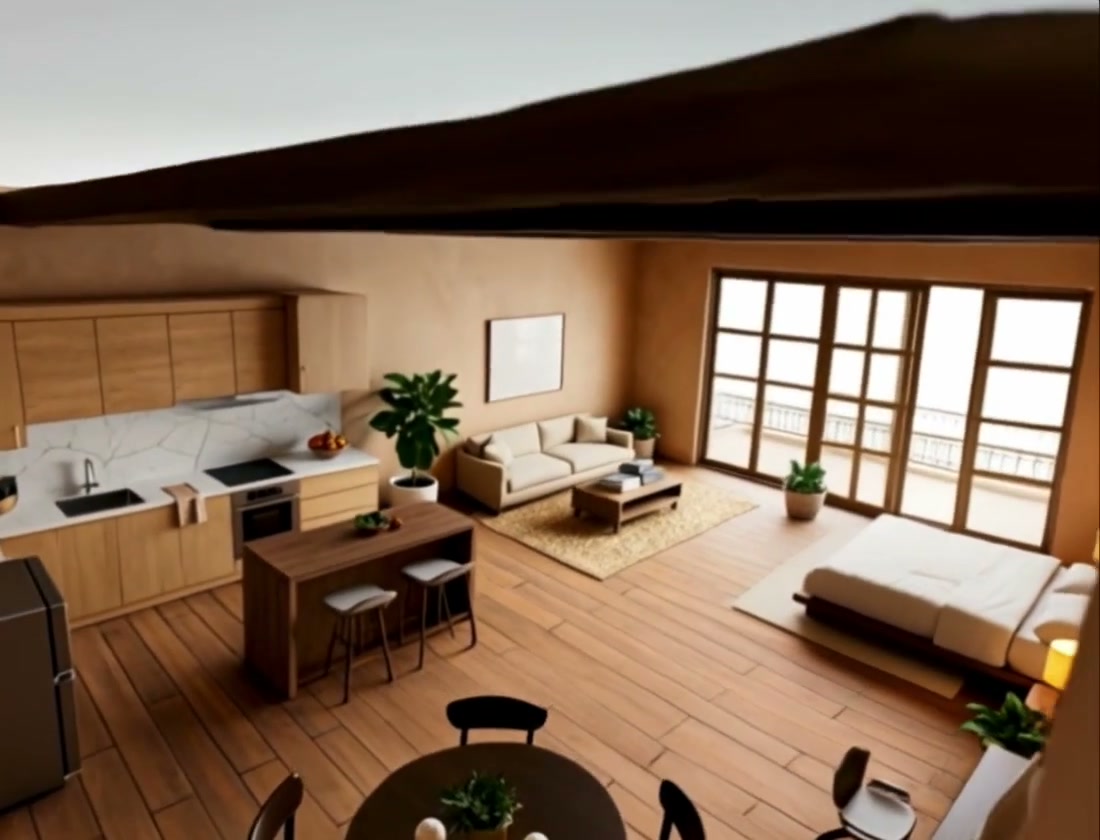
Turn room photos, panoramas, or floor plans into Gaussian Splat walkthroughs that buyers can explore, for listings and virtual staging.
Problem
Most property media is still flat: photos, video tours, or expensive scans that are hard to edit.
How Echo helps
Echo generates a persistent 3D world from limited visual input, so you can view rooms from new angles and stage them.
Output
Photoreal Gaussian Splat (3DGS) scenes in SPZ or SOG format for web walkthroughs, plus other asset files when your pipeline needs them.
3DGSvirtual stagingwalkthroughs
Architecture
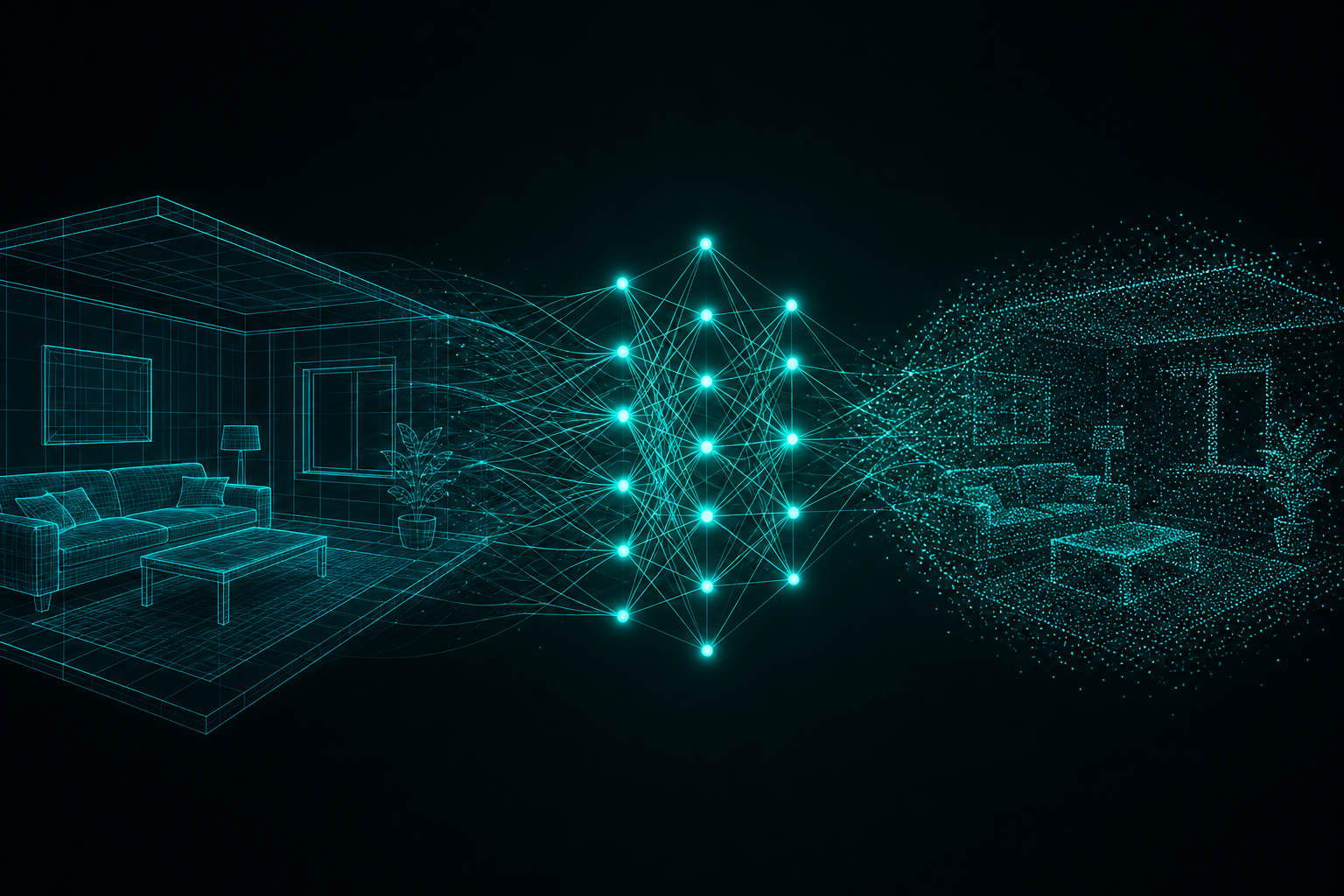
Floor plans into navigable 3D worlds
Try out layouts, materials, and walkthroughs before a full modeling pass in BIM (building information modeling) or DCC (digital content creation) tools.
Problem
Architects often share designs as drawings, which clients, buyers, and collaborators cannot walk through.
How Echo helps
Echo turns visual references and plans into a 3D-consistent scene that teams can inspect, restyle, and share.
Output
Persistent Gaussian Splat worlds for reviews, planning, and early design decisions.
floor plan to 3Ddigital twinSPZ
Robotics
Digital twins for robotics and Sim2Real
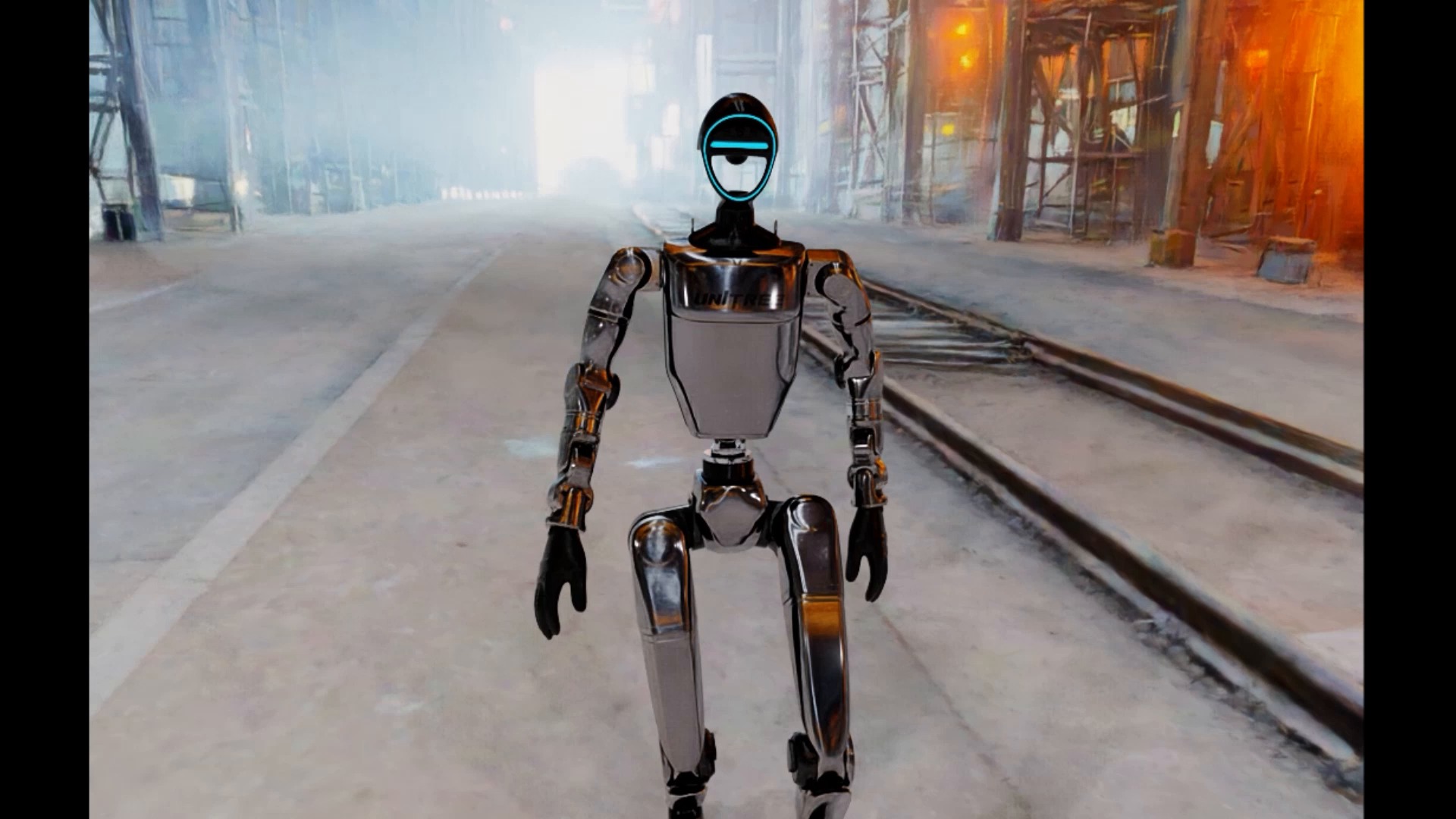
Generate realistic home, warehouse, or factory worlds for robot planning, training data, and simulation pipelines.
Problem
Robots need practice environments, but real-world data collection and manual simulation authoring are expensive.
How Echo helps
Echo can create detailed digital copies of real spaces from a small amount of visual input, which gives embodied AI teams more environments to work with.
Output
Today, Echo produces 3DGS worlds that focus on appearance. Geometry, semantics, and physics representations are on the roadmap.
Sim2Realdigital twinsphysical AI
Film
Previsualization and virtual production sets
Move from mood board to 3D set: scout shots, block cameras, and test environments before building final assets.
Problem
Film teams need to try out sets quickly, but full set modeling and scans slow down early creative work.
How Echo helps
Echo gives directors and artists a navigable world rather than a single generated image or fixed video.
Output
Interactive splat scenes to use as references for previsualization, virtual production, and look development.
previscamera freedomworldbuilding
Artists
Interactive art and worldbuilding
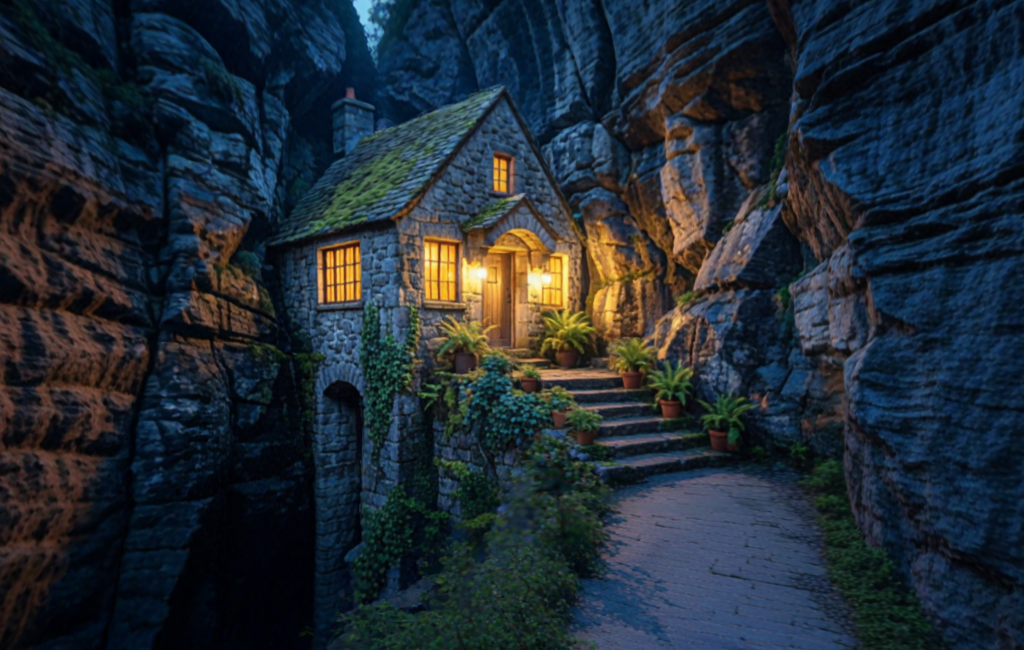
Turn sketches, references, prompts, and visual styles into 3D spaces that audiences can step inside.
Problem
Image and video models are expressive, but they do not give artists a persistent space to revisit, edit, and move through.
How Echo helps
Echo turns a creative idea into a stable 3D world that you can restyle, stage, and share.
Output
Gaussian Splat scenes that run in the browser, for installations, portfolios, stories, and interactive experiences.
interactive artstyle transfer3DGS
Games
Playable prototypes and game worlds
Generate consistent 3D environments from images or prompts, then test movement, mood, and level ideas faster.
Problem
Game teams spend a lot of time blocking out environments before they know whether a space feels right.
How Echo helps
Echo can produce a navigable world that designers can inspect and use as the basis for interactive prototypes.
Output
3DGS worlds for trying level ideas quickly, which you can then export or convert for the rest of your pipeline.
playable worldsrapid prototypingSOG
Developers
World generation inside apps and agents
Call Echo from product workflows, agent systems, creative tools, and internal pipelines through the SpAItial API.
Problem
Teams need to generate 3D worlds from their own software, in addition to using a web app.
How Echo helps
Your code can call the same Echo models to create worlds from text, URLs, files, or panoramas.
Output
Asynchronous API jobs that return Gaussian Splat worlds (SPZ or SOG) and assets ready to load in a viewer.
APISPZ/SOGAI agents
VR/AR
Spatial web, VR, and AR experiences
Use generated Gaussian Splat worlds as immersive web spaces, VR environments, AR references, or spatial memories.
Problem
Immersive apps need realistic environments, but creating them manually is slow and expensive.
How Echo helps
Echo outputs lightweight 3D scenes that stream over the web and work with web viewers and real-time apps.
Output
3DGS worlds that run on the web, for immersive previews, 3D storytelling, and shareable links.
spatial webVR/ARreal-time
Education
Education, museums, and cultural heritage
Build explorable historical, scientific, and cultural spaces that students and audiences can learn inside.
Problem
Educational content is often limited to static media, but many concepts are easier to understand in 3D.
How Echo helps
With Echo, you can generate and share 3D lessons that feel more like visiting a place than watching a clip.
Output
Interactive worlds for classrooms, exhibitions, public explainers, and research communication.
educationheritageinteractive
Common questions about world models.
Can I use Gaussian splats for real estate tours?
Yes. Gaussian splats work well for photoreal, real-time property walkthroughs. They keep view-dependent appearance (the way surfaces change as you move around them), and people can explore them in a browser.
How can world models help robotics simulation?
World models can generate digital environments from limited input. This gives robotics teams more spaces for planning, training data, and Sim2Real (simulation to real world) experiments.
Are Gaussian splats better than video for virtual production?
For camera freedom, yes. Video is a fixed sequence of frames. A Gaussian Splat world is a persistent 3D scene that filmmakers can inspect from new viewpoints.
Can developers generate 3D worlds through an API?
Yes. Developers can use the SpAItial API to start world generation jobs from text, files, URLs, and panoramas. Each job returns Gaussian Splat worlds ready to open in a viewer.
What is the difference between a generated world and a generated video?
A generated video shows a path through a place. A generated world is a stable 3D scene that you can revisit, edit, export, and explore from any angle.